Tag: Passive Physical Visualization

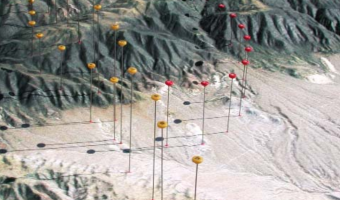
2003 – Solid Terrain Model with Airplane Trajectory

A real case study involving the use of a physical 3D trajectory visualization on top of a 3D terrain model to analyze the causes of a plane crash. This case study is interesting in terms of cost-benefit analysis, since these models appear to be extremely time-consuming to build. The case study includes an informal comparison with animations: "The mock jurors later related that the physical model was easier to understand and it allowed them to discuss the issues with each other more easily than […]

Added by: Pierre Dragicevic. Category: Passive physical visualization  Tags: cartographic, litigation, plane crash, solid terrain model


2004 – Full-Color 3D-Printed Scientific Visualizations

In 2004, the Visualization Research Lab from Brown University printed full-color 3D models of scientific visualizations. They published a poster on the topic where they discuss the technical challenges they faced. The printer used was a Zcorp Z406. Source: http://vis.cs.brown.edu/areas/projects/rapid.html Related: Also see our entry 1995 – SDSC TeleManufacturing Facility.


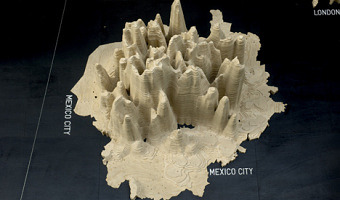
2007 – Global Cities: Elevation Maps of City Population

Large-scale physical density models where plywood forms represent the populations of 12 of the world’s major urban centres. Made by a team of designers and architects led by Professor Richard Burdett. Source: Eliza Williams (2007) Global Cities at Tate Modern. Right photo by Stefan Geens.

Added by: Pierre Dragicevic. Category: Passive physical visualization  Tags: cartographic, data sculpture, large-scale, population, walkable


2009 – In-Formed: More Data-Driven Tableware

Another data-driven tableware, this time conveying world statistics. The fork on the image shows calories consumption for the US and three other countries. Source: Nadeem Haidary.

Added by: Yvonne Jansen, sent by: Fanny Chevalier. Category: Passive physical visualization  Tags: data sculpture, tableware, world statistics


2010 – Limbique: Brain Slices

A neuroscientific physical visualization made by an artist and a neuroscientist. Exhibited at the at the VisWeek 2011 art show. Source: David Paulsen and Pinar Yoldas. Photo by Samuel Huron.

Added by: Pierre Dragicevic. Category: Passive physical visualization  Tags: brain, science


2011 – DataCoaster: Data-Driven Toys

DataCoaster is a re-imagining of the classic waiting room toy. But instead of arbitrarily loopy lines, DataCoaster's lines are generated by data, essentially transforming a simple, kinetic toy into a graph of information. If you're interested in getting one of these for your data, have a look at the source for this entry and contact Bobby - he is planning to offer this service. Source: Bobby Genalo. DataCoaster.

Added by: Yvonne Jansen, sent by: Bobby Genalo. Category: Passive physical visualization  Tags: toy


2011 – Can We Keep Up: Sponges Show Domestic Water Usage

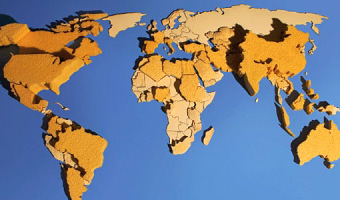
Can We Keep Up is a a physical data visualisation that investigates the domestic need for water in cities all over the world. Source: infosthetics.com. Image from Hal Watts.

Added by: Yvonne Jansen, sent by: Romain Vuillemot. Category: Passive physical visualization  Tags: cartographic, data sculpture, sponge, water


2011 – DIY United States Electoral Vote Map

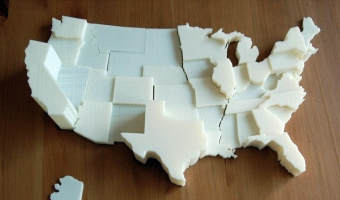
This is a 3D scale replica of the United States, the state height corresponds to the number of electoral votes each state controls in a presidential election. Source: thing 11178 on thingiverse.com


2012 – General Motors' 3D LEGO Visualizations

LEGOs help business executives log and explore data. Sources: Mark Wilson (2012) How GM Is Saving Cash Using Legos As A Data Viz Tool. The Daily Drive (2012) GM Plays with Legos (Video).

Added by: Pierre Dragicevic, sent by: Fanny Chevalier. Category: Passive physical visualization  Tags: industry, interactive, LEGO, manual update, pragmatic visualization, rearrangeable