Tag: Textile

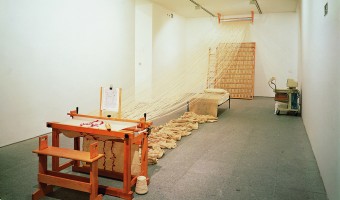
1993 – Slumber: Brainwave Weaving

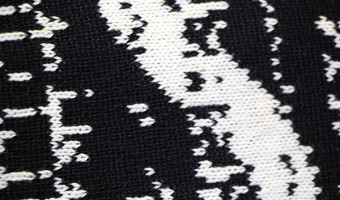
Slumber was a multi-year gallery installation/performance by artist Janine Antoni. From the website description: Performance with loom, yarn, bed, nightgown, EEG Machine and artist’s REM reading. Antoni transforms the fleeting act of dreaming into a sculptural process. Between 1994 and 2000, the artist slept in the bed while an electroencephalograph machine recorded her eye movement. During the day, Antoni would sit at the loom and weave shreds of her nightgown in the pattern of her REM. The […]

Added by: Judith Donath. Category: Passive physical visualization  Tags: brainwaves, dreams, EEG, textile, self-logging, sleep, weaving
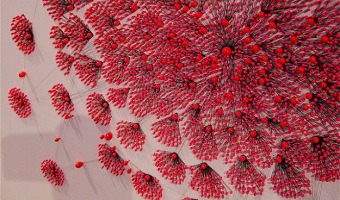

2011 – Digital Arab Spring

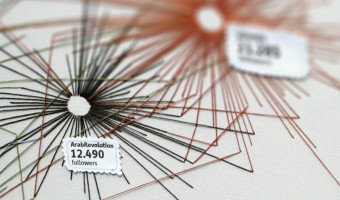
Twitter-networks were used by the citizens of the North African states to communicate and organize during the Arab Spring. The virtuality of a computer network becomes tactile and palpable here, like the virtual organization led to actual protests in the streets. The purpose of this data visualisation is to illustrate a magazine-cover and spread and was created as part of an academic graphic design programme. Sources: René Rieger, Digital Arab Spring. Gestalten Blackboard entry (2012).

Added by: René Rieger. Category: Passive physical visualization  Tags: citizen infrastructures, network, textile, twitter


2015 – Climate Datascapes

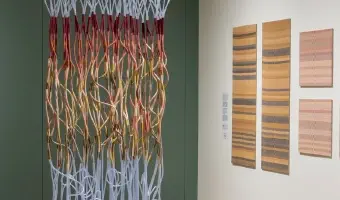
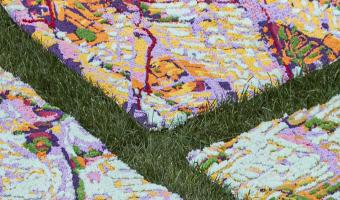
Artist Tali Weinberg is working since 2015 on extensive series of textile data-art documenting heat waves, water color variations, average temperatures, etc. On her website you can discover the dozen different pieces from the “Climate Datascape” series, as well as other data projects. I translate climate data from the National Oceanic and Atmospheric Administration into abstracted landscapes and waterscapes, materializing the data with plant-derived fibers and dyes and […]

Added by: Anne-Laure Fréant. Category: Passive physical visualization  Tags: textile, weaving, climate, environment, hand-made


2016 – Accomplishments

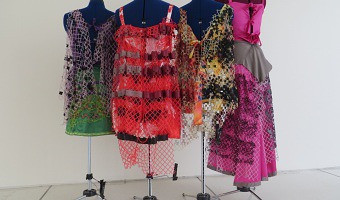
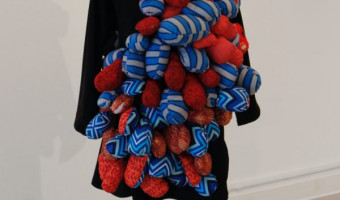
Accomplishments is an exploration of personal data tracking, wearable art, wearable technology, social media, and data physicalization. Each day accomplishments were tracked, first on paper then by sewing spheroid masses onto a dress worn for four months. By hand sewing each accomplishment onto this dress, they became a part of the wearer's physical presence and identity. The work juxtaposes the immediateness of social media posts, and the separate identity we create for ourselves online which […]

Added by: Michelle Sylvestre. Category: Passive physical visualization  Tags: data clothing, textile


2018 – Stretch Orchestra Marble Run

A connected exercise pad made with textile sensors responds to your interaction by inviting you to experience physical activity data in a playful way; a giant marble run, to elicit a childlike feeling of wonder and satisfaction. The installation is part of research project using materials to explore the experience of systems and technologies designed to aid behaviour change. In collaboration with intelligent textiles innovators Footfalls and Heartbeats the interactive installation proposes a […]

Added by: Marion Lean. Category: Interactive installation  Tags: exercise, marble, textile


2018 – Anthropocene Footprints

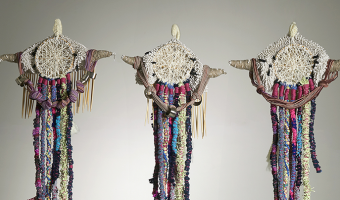
Handmade physicalizations of Canada's greenhouse gas emissions, by Mieka West and Sheelagh Carpendale. Each object represents data from a specific year (1990, 2010, and projections to 2030). Initially meant to be smog masks, the designs evolved into strange and beautiful objects evoking indigeneous artefacts such as Native American dreamcatchers, Inca quipus and Polynesian genealogical instruments, and whose visual and material complexity is reminiscent of Nathalie Miebach’s Woven Sculptures. […]

Added by: Pierre Dragicevic. Category: Passive physical visualization  Tags: textile, greenhouse gas, hand-made, pollution, quipu


2019 – The 100-Year Climate Yarn

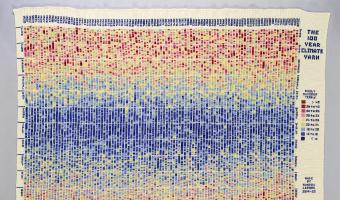
The 100 Year Climate Yarn is a large, crocheted Data-Art wall-hanging which tracks the daily maximum temperatures in Adelaide, South Australia over a 100 year period from 1920 to 2020. Textile Artist Sandra Lepore worked with Energy & Climate Specialist Heather Smith to plan the work using colours carefully selected to emphasise extreme temperatures. Sources: www.facebook.com/myclimateyarn/ www.instagram.com/myclimateyarn/ Related: Also see our entry 2013 – Temperature Scarves and Afghans […]

Added by: Sandra Lepore. Category: Passive physical visualization  Tags: data clothing, temperatures, textile, weather


2019 – Sleep Blanket

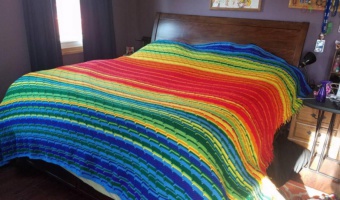
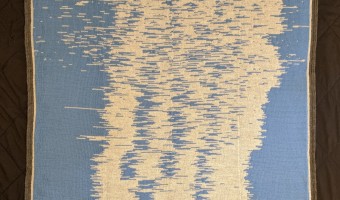
A visualization of my son's sleep pattern from birth to his first birthday. Crochet border surrounding a double knit body. Each row represents a single day. Each stitch represents 6 minutes of time spent awake or asleep. Source: Seung Lee (2019) Twitter thread. Related: Also see our entry 2013 – Temperature Scarves and Afghans.

Added by: Pierre Dragicevic, sent by: Steffen (@s1effen). Category: Passive physical visualization  Tags: baby, data clothing, textile, self-logging, sleep


2019 – Self Knitted Scarf of Train Delays

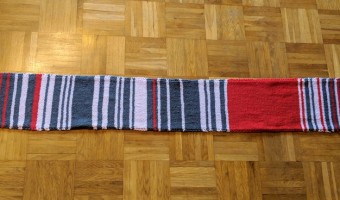
The mother [of] Sara Weber knitted this scarf during her daily train rides to work in Munich and used different colors depending on train delays. Every day two rows: Grey, less than 5 minutes delay. Pink, 5 to 30 minutes delay. Red, both rides delayed or one more than 30 minutes. The huge red area was during construction work, where the train was substituted by a bus. Side note: The tweet went viral and at the end she sold the scarf at eBay and gave the money to the "Bahnhofsmission" who take […]

Added by: Steffen Haesler. Category: Passive physical visualization  Tags: data clothing, delays, fabric, knitting, textile, transportation


2024 – Sensing Data

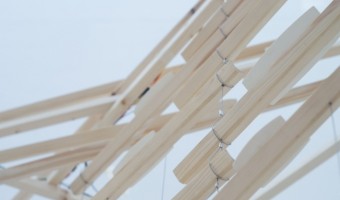
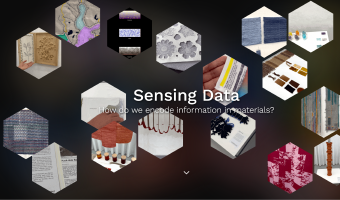
The Sensing Data course was held at KH-Berlin weißensee in 2024–2025. Its focus was on questioning “What happens when we can not only read information visually, but also can experience it through other senses?”. As a result of the course, 17 student projects have been realized, all being original data-physicalizations involving textile work addressing a specific research question. All 17 projects are documented on the course’s website. Source: Mark-Jan Bludau (2025) Sensing […]

Added by: Anne-Laure Fréant. Category: Passive physical visualization  Tags: textile, course, teaching, education